
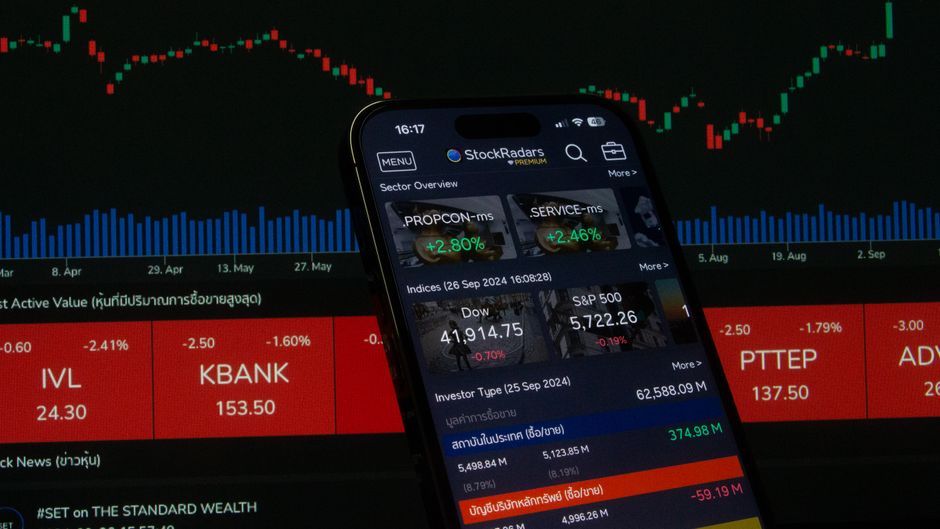
Why an AI wobble abroad matters to you in India
Over the past year, several markets that rode hard on artificial intelligence spending — chips, data centre buildouts, memory manufacturers, and AI-adjacent software — have seen sharp swings. Stocks that were once treated as one-way bets suddenly corrected 20-30% in weeks, only to bounce back on the next positive earnings surprise. If you follow global markets even casually, you've probably seen headlines about "AI bubble fears" alternating with "AI supercycle" optimism within the same month.
You might think this is a foreign problem, unrelated to your SIP or your portfolio. But Indian mutual funds, PMS products, and even some insurance-linked ULIPs now hold meaningful exposure to global technology and AI-themed funds. Domestic IT majors are also increasingly valued on their "AI narrative" rather than just their traditional services growth. So when a theme runs too hot somewhere else, the ripples do reach your statement.
How a theme becomes a bubble — the basic mechanics
A sector doesn't overheat because the underlying technology is fake. It overheats because capital chases a story faster than the story can be proven with cash flows. This usually plays out in stages:
- Early stage: a genuine breakthrough or demand shift attracts serious capital and real earnings growth.
- Momentum stage: retail and institutional money pile in based on the theme's popularity, not company-specific numbers.
- Circular financing stage: companies within the ecosystem start investing in each other, inflating apparent demand (customer today, investor tomorrow, supplier the day after).
- Correction stage: any disappointment — a delayed product, a capex pause, a regulatory question — triggers a re-rating because valuations had no margin of safety left.
None of this means the technology itself fails. It usually means the price ran ahead of the profit timeline, and a chunk of the "demand" was investment money moving between related entities rather than external customers paying real money for a real product.
What actually went wrong in overheated AI markets
A few recurring issues show up whenever an AI-linked market corrects sharply:
- Concentration risk: A handful of companies — chipmakers, memory suppliers, a few large tech buyers — end up driving a disproportionate share of index gains. When even one of them stumbles, the whole index feels it.
- Capex without matching revenue: Companies spend billions building data centres and buying chips on the promise of future AI revenue that hasn't fully materialised yet. Markets eventually ask "where's the profit," and the answer is often "later, we promise."
- Debt-funded expansion: Some of this capex is financed through borrowing rather than free cash flow. Rising funding costs can quickly turn an aggressive growth story into a balance-sheet worry.
- Narrow beneficiary chains: Suppliers of a hot component (say, a specific memory chip or server part) see explosive short-term demand, but that demand can be pulled forward — meaning weaker orders later once buyers have stocked up.
These aren't unique to any one country. They're the standard playbook of any capital-intensive tech boom, and they're worth knowing before you assume a "story stock" will keep climbing forever.
Where India fits into the AI capex chain
India isn't at the centre of global AI chip manufacturing, but it's connected to the theme in a few real ways:
- IT services companies are pitching "AI-led transformation" deals to global clients, and investors are pricing in future revenue from this pivot.
- Domestic data centre operators and real estate players are expanding capacity to serve AI workloads, often funded through debt or REIT-style structures.
- Power and infrastructure companies benefit indirectly, since AI data centres are extremely power-hungry, and India's grid capacity story is part of that global conversation.
- Mutual funds with international allocation sleeves (US tech, global innovation funds) carry direct exposure to the same companies that swing on AI sentiment abroad.
This means a portfolio that looks "purely Indian" can still carry AI-theme risk through indirect channels — global fund allocations, IT sector weightings in benchmark indices, or NBFC/bank lending to data centre projects.
A practical checklist before you buy the AI story
Whether it's a domestic IT stock riding the AI narrative, a thematic mutual fund, or a global tech ETF available through Indian platforms, run these checks first:
- Revenue vs. narrative: Check the company's actual AI-attributed revenue disclosure, not just management commentary about "strong AI pipeline."
- Capex-to-cash-flow ratio: If a company is spending far more on AI infrastructure than its operating cash flow supports, ask how it's funding the gap — debt, equity dilution, or related-party deals.
- Customer concentration: If a large chunk of "AI demand" comes from just two or three related companies (especially ones with cross-investments), treat the growth number with caution.
- Valuation versus history: Compare current price-to-earnings or price-to-sales multiples with the company's own 5-year average, not just with sector peers who are equally inflated.
- Fund overlap: If you hold multiple mutual funds, check whether they all quietly hold the same handful of AI mega-caps, giving you concentrated exposure without realising it.
The takeaway: themes are not strategies
AI is a genuine, multi-decade technology shift, and it will keep generating real winners. But "AI exposure" is not a strategy by itself — it's a label that can sit on top of very different quality businesses, from disciplined cash-generating companies to speculative capex bets funded by circular deals. The lesson from every overheated tech cycle, including this one, is the same: separate the technology's long-term promise from the short-term price action of stocks wearing its name. Diversify across sectors and geographies, size any single-theme bet modestly, and let earnings — not headlines — decide how much of your portfolio a story deserves.