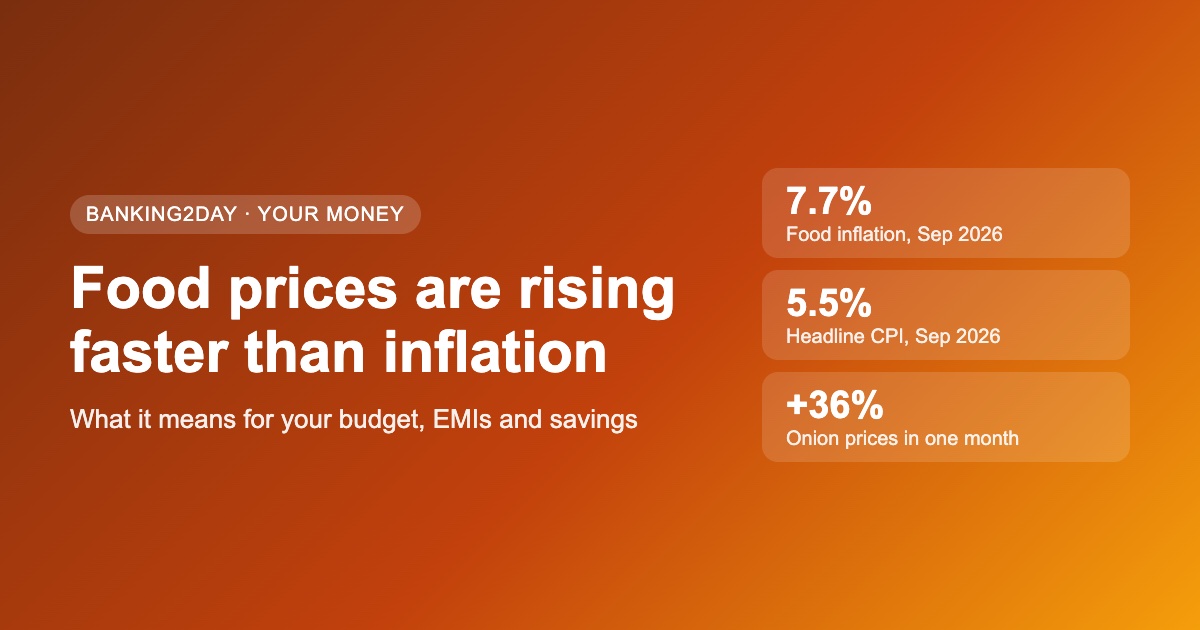
Official inflation for September 2026 came in at 5.5%, comfortably inside the RBI's 2–6% target band. On paper, that looks calm. But if your monthly grocery bill feels heavier, you are not imagining it: food prices are rising much faster than the headline number.
Here is what is happening, why it matters for your household budget and loans, and a few simple steps to stay ahead of it.
The numbers behind the kitchen bill
- Food inflation jumped to 7.7% in September, from 6.0% in August.
- Vegetables and pulses went from 1.6% inflation in August to 9.2% in September, in a single month.
- Onions rose about 36% at retail in September alone.
- Sugar is up nearly 30% from a year ago, refined cooking oil about 15%, and tur and urad dal more than 8%.
- Rural inflation crossed 6% for the first time this financial year.
Food takes up a far bigger share of spending in most Indian homes than it does in the overall inflation basket. So for many families, real-life inflation is closer to the food number than the 5.5% headline.
Why prices are climbing now
A weak and uneven monsoon. Rainfall ended the season about 13% below normal, and East and Northeast India received only around three-quarters of their usual rain. Kharif paddy was sown on less land than last year, and reservoirs were about 27% lower than a year ago in early November.
El Niño. A strong El Niño tends to push up food prices worldwide, so importing our way out of shortages is harder and costlier.
Costlier fuel and fertiliser. Tensions in West Asia have pushed crude oil sharply higher. That raises transport costs for everything, and farm inputs like fertiliser too.
The base effect wore off. Prices were unusually high in August last year, which made this August's year-on-year number look mild. That cushion disappeared in September, and the real trend showed up.
What it means for your loans and EMIs
When food inflation stays high, the RBI usually becomes cautious about cutting interest rates. The repo rate is currently 5.5%. If you were waiting for rates to fall before taking a loan or expecting your floating-rate EMI to drop soon, it may be wise to plan as if rates stay where they are for a while.
- Floating-rate home or personal loans: don't count on an EMI cut in the near term when you plan your monthly budget.
- Planning a new loan: compare lenders on the full cost (interest rate, processing fee and any prepayment charges), not just the headline rate.
- Credit card dues: a tighter grocery budget can tempt you to roll over card bills. Card interest is far costlier than almost any other borrowing, so pay the full amount where you can.
Five simple ways to protect your monthly budget
- Track food spend separately for one month. Most people underestimate it. Knowing the real number makes the rest of the budget honest.
- Shift some buying to seasonal and local produce. Items hit by supply shocks, like onions this year, can be swapped or bought in smaller quantities until prices settle.
- Use rewards on everyday spends wisely. If you already use a credit card responsibly, one that gives rewards on groceries or UPI spends can return a little of what inflation takes. Only do this if you clear the bill in full every month.
- Keep an emergency buffer. Aim for at least three months of essential expenses in a savings account or liquid fund, so a price spike doesn't push you into expensive borrowing.
- Check your credit score before you need credit. A healthy score gets you better loan terms. Knowing where you stand early gives you time to fix errors or pay down dues.
What to watch in the coming months
Three things will decide whether food prices cool down or keep climbing:
- Rabi sowing: whether water in reservoirs and fertiliser supply are enough for winter crops. The government has approved a ₹62,370 crore fertiliser subsidy for the rabi season to help.
- Wholesale to retail: wholesale food prices were rising faster than retail prices in September, which can mean more increases are yet to reach shop shelves.
- Wages and other prices: if rural wages and non-food prices start rising too, inflation could become more stubborn.
The government can also release food stocks from its reserves to calm prices if needed.
The bottom line
The 5.5% headline number hides the pressure many households feel at the grocery store. Plan your budget around the food number, don't bank on an early EMI cut, and keep your credit healthy so you have good options if you need them.
Figures are as reported for September 2026 by government data, summarised in Zerodha's The Daily Brief (13 November 2026). This article is for general information only and is not financial advice.